
Money IQ
The editorial side of compareloanapps.com. Plain-English guides on how loan apps actually price, where they are legal, which ones to avoid, and the math behind the marketing.
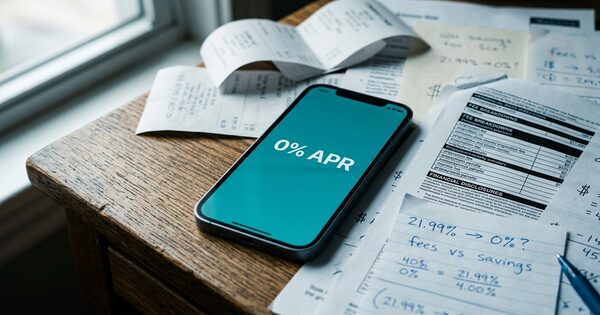
The True Cost of Loan Apps: APR vs. Origination Fees vs. Subscription Fees in 2026
Loan apps stack four very different fee shapes on top of each other: a flat APR, an origination cut, a monthly subscription, and a "voluntary" tip the UI is engineered to make feel mandatory. The one formula that normalizes all four into a single number, applied to a $300 advance across five real apps.
 By Jordan Leventhal · 11 min read




Cash Advance Apps vs. Payday Loans: What Happens to Your Bank Account
Both take the money straight from checking on payday. The mechanics, the overdraft risk, and the bureau fallout are very different.
 By Maya Okafor · 9 min

Co-Signer and Joint Applicant Loan Apps: How They Actually Work and What Your Helper Is Signing Up For
A co-signer is legally on the hook for every missed payment. What joint and co-signed loan apps actually ask of your helper, and the bureau trail either way.
By Maya Okafor · 10 min

Do Loan Apps Show Up on Your Credit Report? A Plain-English Breakdown for 2026
Which loan apps report to Equifax, Experian, and TransUnion, which ones stay silent, and what shows up if you miss a payment.
By Maya Okafor · 9 min

Loan Apps for Bad Credit (Under 580 FICO): What Actually Approves You in 2026
Under-580 FICO does not lock you out of the loan app market, but it reshapes who says yes. What underwrites on deposit flow instead of credit score.
By Maya Okafor · 10 min

App Store vs. Google Play Loan App Policies: How the Two Stores Police Small-Dollar Lending
Apple and Google enforce very different rules on loan apps. The gaps are where the predatory products live.
 By Ray Delacruz · 10 min

How to Spot a Fake Loan App: The Pipeline, the Tells, and the Fees That Give It Away
Fake loan apps follow the same pipeline every time: unsolicited SMS, sideloaded install, ID upload, advance fee, silence. The five tells to catch it early.
By Ray Delacruz · 9 min